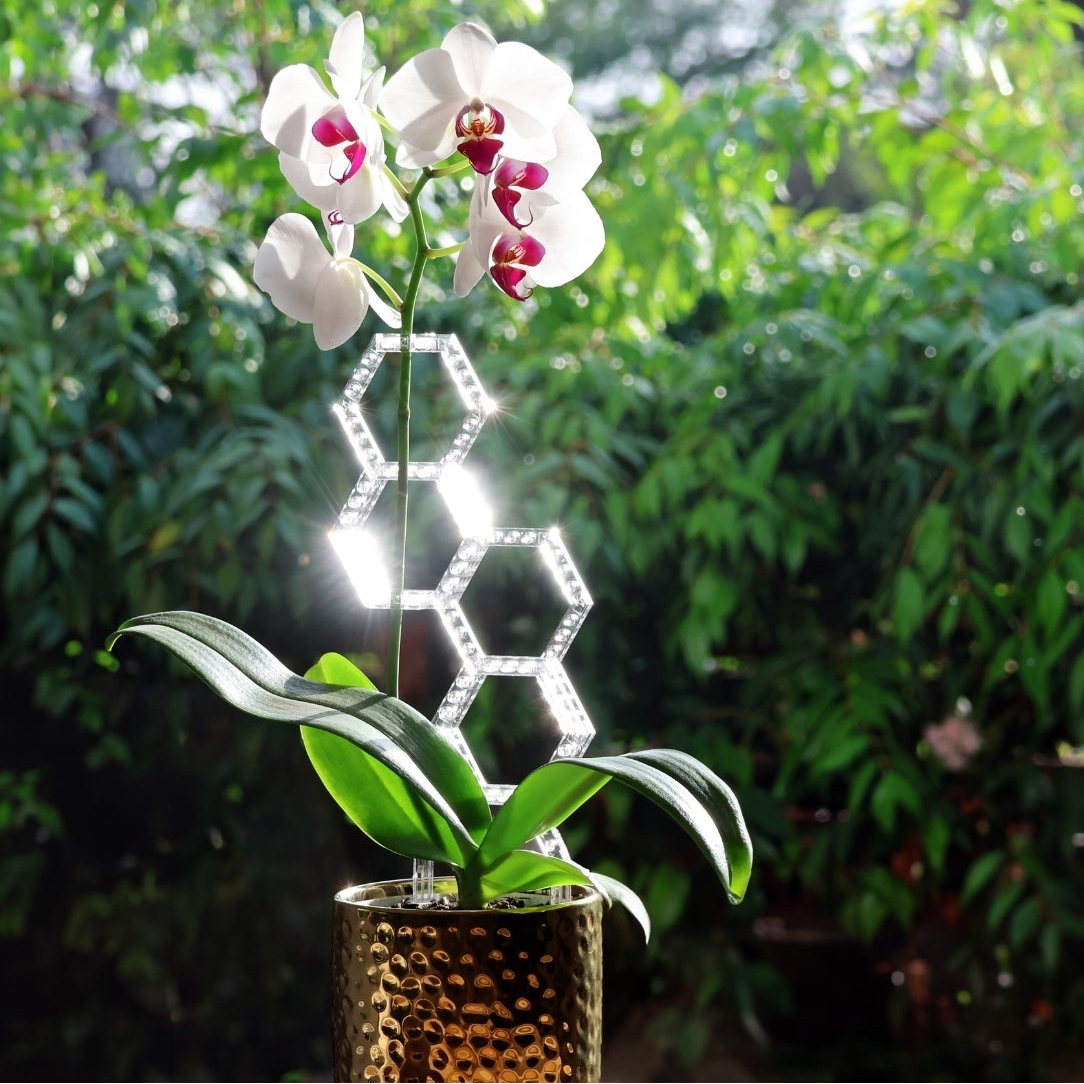
Article: Best Indoor Climbing Plants for Beginners (and How to Support Them)
Best Indoor Climbing Plants for Beginners (and How to Support Them)
There is nothing quite like the feeling of bringing a new houseplant home, finding it the perfect spot, and watching it thrive. If you are looking to add some life, character, and lush greenery to your indoor space, climbing houseplants are an incredible place to start. They are easily some of the most popular indoor plants available today, and for good reason. They are highly versatile, visual, and dynamic.
Unlike static potted plants that sit neatly on a table, climbing varieties grow up, around, and over things. This allows you to draw the eye upward and fill your rooms with vertical, living art.
Beyond their stunning aesthetics, growing climbing plants indoors comes with massive benefits. They can soften harsh architectural corners, improve your indoor air quality, and bring a refreshing sense of nature directly into your living room. The best part? Climbing varieties are often incredibly rewarding to grow because they respond so visibly to your care.
However, many beginner plant parents make the same common mistake. They let their new vines trail lazily along a bookshelf or hang down from a high basket for months on end. While trailing is fine, these plants are natural-born climbers. In the wild, their aerial roots latch onto trees and rock faces to reach the bright light of the forest canopy. By providing an indoor plant support early in your plant's life, you mimic this natural habitat. This signals to your plant that it is safe, secure, and ready to push out bigger, healthier growth.
Let’s look at what makes an indoor vine perfect for beginners, explore five of the absolute best climbing plants to start your collection, and learn how to support them for long-term success.
What Makes a Good Beginner Climbing Plant?
If you are new to the world of indoor plant care, you want to set yourself up for a win. The best climbing plants for beginners all share a few essential traits that make them incredibly easy indoor plants to keep alive:
-
Low maintenance: They don't require complex watering schedules, expensive misting setups, or precisely mixed soils.
-
Fast-growing: They give you quick visual feedback. Seeing new leaves unfold week after week builds your confidence as a plant parent.
-
Adaptable: They can comfortably tolerate the typical fluctuations in indoor temperature and humidity found in most Australian homes.
-
Forgiving: They won’t dramatically drop all their leaves if you accidentally forget to water them for a few extra days.
The 5 Best Climbing Plants for Beginners
1. Golden Pothos (Epipremnum aureum)

Often called "Devil’s Ivy" because it is practically impossible to kill, the Golden Pothos is the ultimate starter plant. It features heart-shaped leaves marbled with beautiful splashes of yellow and cream.
-
Why it’s beginner-friendly: It thrives in almost any lighting condition from low-light home offices to bright lounge rooms. It will easily tell you when it’s thirsty by letting its leaves droop slightly, bouncing back completely within hours of getting good water.
-
Growth habits: Left to trail, its leaves will stay relatively small and its vines can look thin. But when guided upward, a Pothos undergoes an amazing transformation.
-
Support recommendations: Introduce a modular plant support early. Secure the main vines to the base of the trellis. As the plant climbs toward the light, its aerial roots will anchor it, and you'll notice the new leaves growing significantly larger and more vibrant.
2. Heartleaf Philodendron (Philodendron hederaceum)

With its deep green, perfectly heart-shaped leaves and elegant, slender vines, the Heartleaf Philodendron brings a classic, romantic aesthetic to your indoor jungle.
-
Why it’s beginner-friendly: It is highly resilient and incredibly forgiving of occasional neglect. It thrives in moderate, indirect indoor light and only needs watering when the top few centimetres of soil feel completely dry.
-
Growth habits: This plant is a rapid grower that loves to climb. Its vines are highly flexible, making it incredibly easy to weave, train, and style around a structural frame.
-
Support recommendations: Because its stems are quite delicate compared to heavier plants like Monsteras, it responds beautifully to lightweight, customisable trellis systems. Guide the individual stems upward to create a thick, dense column of green.
3. Satin Pothos (Scindapsus pictus)

If you want something with a unique texture, the Satin Pothos is an absolute must-have. Its thick, velvety matte-green leaves are dappled with shimmering silver patches that catch the indoor light beautifully.
-
Why it’s beginner-friendly: Despite its exotic, high-end appearance, the Satin Pothos is just as tough as its golden cousin. It is highly drought-tolerant, meaning it actually prefers it if you forget to water it occasionally rather than over-watering it.
-
Growth habits: It has a slightly slower, more deliberate growth rate than a standard Golden Pothos, which makes its shape very easy to manage and maintain indoors.
-
Support recommendations: A vertical trellis is perfect here. Because the leaves grow close together along the stem, training it upward creates a gorgeous, overlapping shingle effect, looking like a cascading wall of silver-patterned velvet.
4. Monstera Adansonii (Swiss Cheese Plant)

You are likely familiar with the famous giant Monstera Deliciosa, but its smaller cousin, the Monstera Adansonii, is an absolute dream for indoor spaces. It features smaller, narrower leaves packed with natural, eye-catching holes (called fenestrations).
-
Why it’s beginner-friendly: It gives you that iconic, tropical jungle look without taking up your entire living room floor. It loves bright, indirect light and a regular weekly watering.
-
Growth habits: This is an incredibly enthusiastic climber. In the wild, it uses its powerful aerial roots to pull itself up into the trees. In your home, it will rapidly grow upwards if given a sturdy framework.
-
Support recommendations: Because this plant can become quite heavy and wild as it matures, traditional, thin bamboo stakes simply won't cut it. It requires a robust, expandable support system that can handle its weight and adapt to its rapid height increases.
5. Cebu Blue Pothos (Epipremnum pinnatum 'Cebu Blue')

For the modern plant parent, the Cebu Blue offers something truly special. It features elongated, arrow-shaped leaves with a stunning, metallic silvery-blue hue that shifts depending on how the indoor light hits it.
-
Why it’s beginner-friendly: It possesses the exact same bulletproof genetics as the standard Golden Pothos but stands out with its rare, architectural colour palette. It is highly adaptable and requires very basic, minimal care.
-
Growth habits: When allowed to trail downwards, the Cebu Blue keeps its signature narrow, blue-toned leaves. However, when trained to climb vertically, the leaves expand dramatically and can even begin to develop beautiful fenestrations as the plant matures.
-
Support recommendations: Start this plant on a sturdy vertical trellis from day one. Secure the vines firmly to encourage the aerial roots to grip, unlocking its mature, split-leaf potential much faster.
Why Plant Support Matters
Providing proper structure for your climbing houseplants isn't just about making them look neat, it fundamentally changes how the plant grows.
-
Healthier and larger growth: When a climbing plant grows vertically, it tricks the plant's internal hormones into thinking it is climbing a massive tree in the wild. This biological cue triggers the plant to produce thicker stems, shorter spaces between leaves, and significantly larger foliage.
-
Better use of indoor space: Horizontal surfaces like tables, desks, and countertops are valuable real estate. Training your plants to grow upwards allows you to reclaim your surfaces while utilizing empty vertical wall space.
-
Easier plant management: Trailing vines easily get tangled, caught in vacuum cleaners, or stepped on by pets. A supported plant keeps everything contained, safe, and organized within its pot.
-
Improved appearance: Vertical supports allow you to become a plant stylist. You can intentionally hide bare stems, fill in empty gaps, and sculpt your greenery into a gorgeous, thriving focal point.
Indoor Climbing Plants Comparison
|
Plant Name |
Difficulty Level |
Growth Speed |
Light Requirements |
Support Needs |
|
Golden Pothos |
Very Easy |
Fast |
Low to Bright Indirect |
Modular Trellis / Pole |
|
Heartleaf Philodendron |
Very Easy |
Fast |
Medium to Bright Indirect |
Lightweight Trellis |
|
Satin Pothos |
Easy |
Moderate |
Medium to Bright Indirect |
Vertical Trellis / Board |
|
Monstera Adansonii |
Easy |
Very Fast |
Bright Indirect |
Heavy-Duty Expandable Trellis |
|
Cebu Blue Pothos |
Very Easy |
Fast |
Medium to Bright Indirect |
Sturdy Vertical Support |
Choosing a Support System That Grows With Your Plant

When shopping for an indoor plant support, many plant parents grab the first cheap bamboo stake or traditional coir pole they see at the garden centre. However, these traditional options have massive limitations. Fixed-size stakes are quickly outgrown, forcing you into a frustrating cycle of untangling delicate vines, pulling out the old support, and disturbing the plant's sensitive root system just to install a taller one. Coir and moss poles can also become messy, degrade over time, and often look ugly inside a modern, styled home.
This is exactly why an expandable, modular system changes the game.
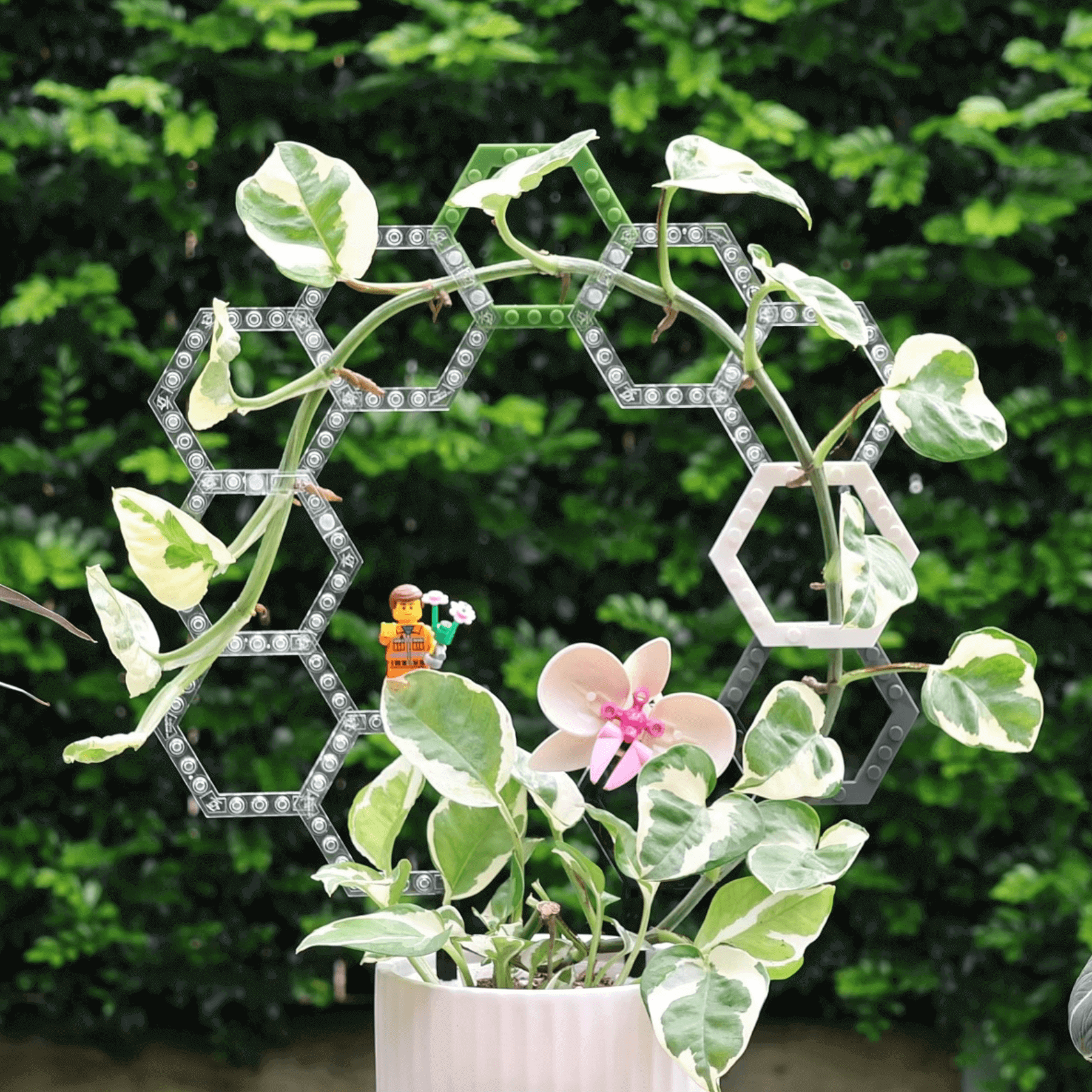
With Vertigrow, you get a LEGO-compatible, expandable plant support system that is specifically designed to grow alongside your climbing collection. Made for modern homes, the Vertigrow system allows you to effortlessly snap on new extensions as your plant reaches the top completely without tools, complicated hardware, or the risk of disturbing your plant's established roots. It provides the clean, reliable, and beautiful structure your plants need to unlock their full potential.
Conclusion: Support Early for the Best Results
Growing indoor climbing plants is one of the most rewarding parts of being a plant parent. Whether you choose the classic, indestructible Golden Pothos, the velvety Satin Pothos, or the architectural Monstera Adansonii, you are in for an incredible journey.
Just remember: you don’t need to wait until your plant is a messy, tangled web of vines before you think about structure. Giving your climbing houseplants proper support from the very beginning sets them up for a lifetime of thick, healthy, and stunning vertical growth.
Ready to give your new green companions the ultimate foundation? Explore Vertigrow's modular, expandable plant support systems today and discover how easy it is to grow your indoor jungle upward. For more helpful tips, check out our recent guide on 5 common indoor plant problems (and how to fix them without repotting)

Written by Sethzaire Barrera