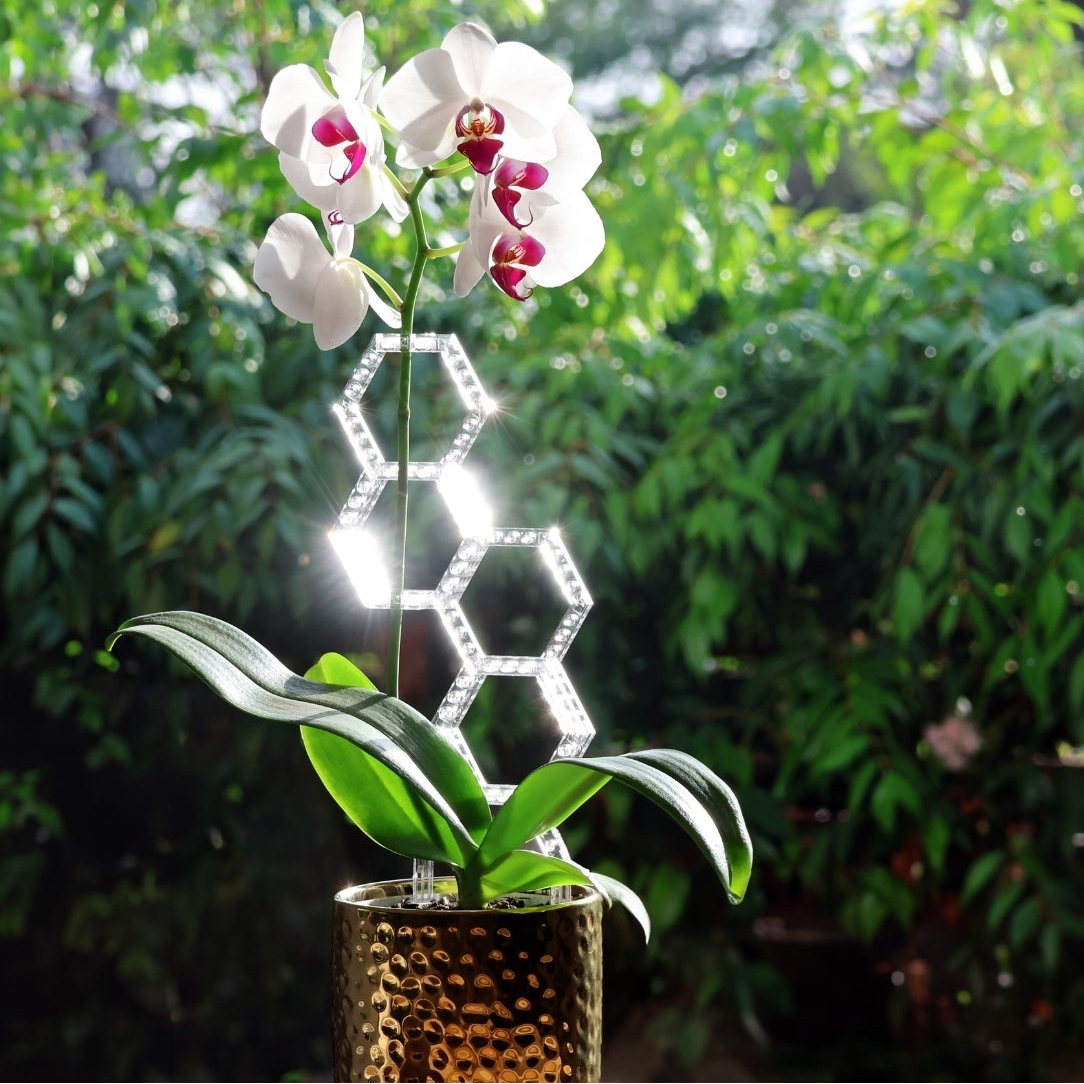
Article: Why Plant Support Matters.
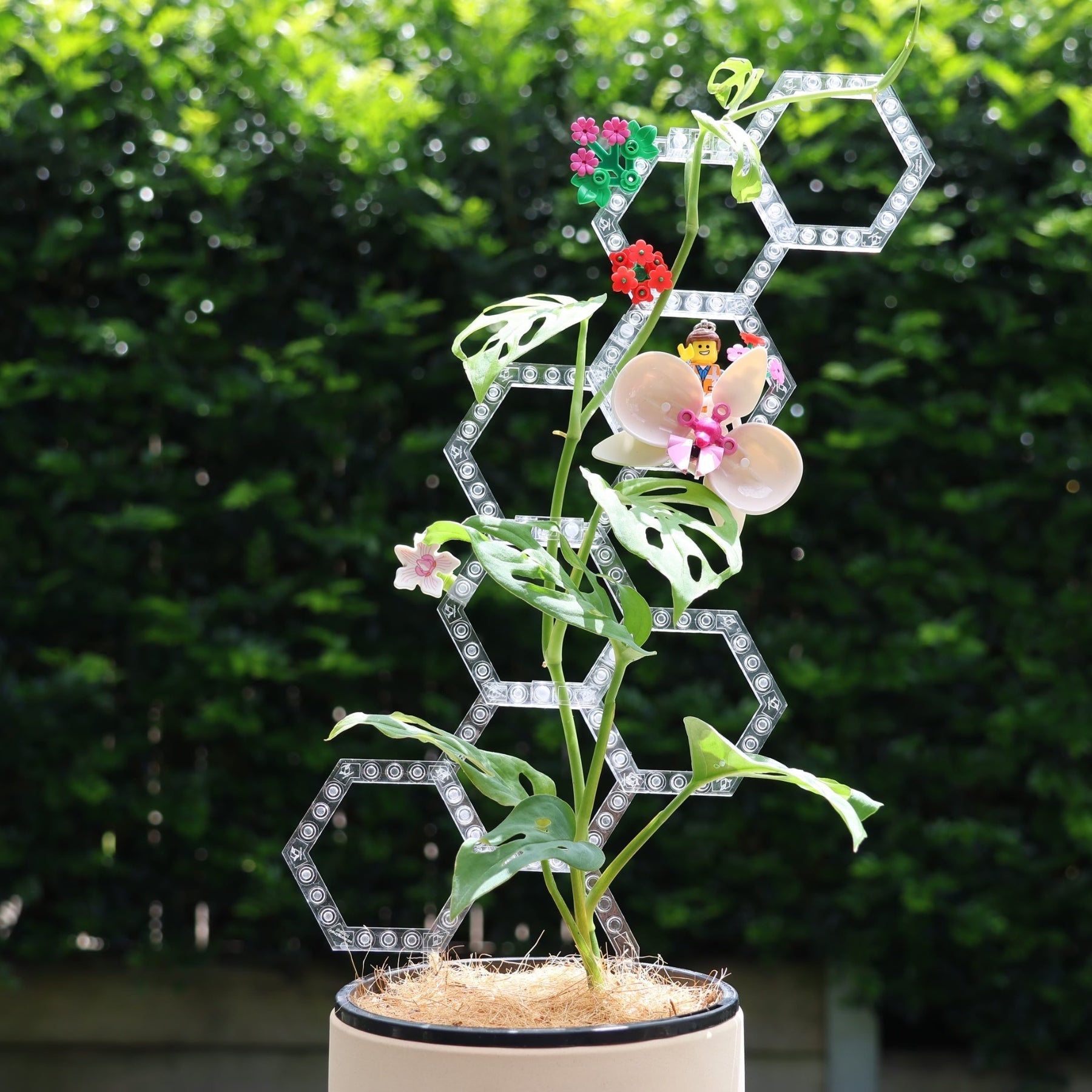
Why Plant Support Matters.
Helping Your Climbing Plants Thrive
If you’ve ever had a plant that started off neat and compact but ended up sprawling across your bench like it’s staging a quiet takeover, you’re not alone.
Many of our favourite houseplants are natural climbers or trailers, designed to grow up, over, or along something in the wild.
When they don’t have that support indoors or on a balcony, they can become tangled, top-heavy, or a little sad-looking. Understanding why plant support matters, and how it helps your plants grow stronger, is one of those small but powerful pieces of gardening knowledge that makes a huge difference.
What Is Plant Support, Really?
Plant support is any structure that gives a plant something to climb or lean on.
In nature, vines and climbing plants attach themselves to trees, rocks, or fences. Indoors, we recreate that environment using things like:
-
Trellises and climbing frames
-
Hoops and poles
-
Wall grids or wires
-
Moss poles or coir poles
These supports guide the plant’s natural growth pattern, helping it move upward toward the light — just as it would in the wild.
Why Climbing Plants Need Support
Plants climb for a reason. It’s a survival strategy that allows them to reach more sunlight without wasting energy growing thick, woody stems.
When we give them something to cling to, they can continue that same efficient pattern indoors.
Here’s what proper support does for your plant:
-
Encourages stronger growth – When vines can climb, their stems thicken and their roots become more stable.
-
Prevents damage – Without support, heavy vines can droop and snap under their own weight.
-
Improves light access – Vertical growth means every leaf gets its share of sunshine.
-
Reduces pest and disease risk – Good airflow around stems and leaves prevents mould and fungus.
-
Keeps plants looking tidy – A supported plant grows upward instead of sprawling across your furniture.
Common Climbing and Trailing Plants That Benefit from Support
Not all plants need help, but many of the most popular indoor species are natural climbers. These include:
-
Pothos (Epipremnum aureum) – Also known as Devil’s Ivy, this hardy plant will climb anything it can find.
-
Monstera deliciosa & Monstera adansonii – Famous for their dramatic, hole-filled leaves that get larger when they climb.
-
Philodendron (Heartleaf, Micans, Brasil) – Tropical vines that grow bigger and more vibrant when trained vertically.
-
Hoya (Wax Plant) – Produces more of its beautiful waxy flowers when trained along a loop or small trellis.
-
Syngonium (Arrowhead Vine) – Starts as a compact bush, but will happily climb a pole if given the chance.
-
String of Hearts (Ceropegia woodii) – Naturally trails, but can be wrapped around a small hoop for a sculptural effect.
-
Outdoor favourites like Ivy, Jasmine, and Passionflower also rely on strong supports in gardens or balconies.
These plants don’t just look neater when supported, their leaf size, colour, and overall health often improve too.

Indoor vs Outdoor Plant Support
Indoor climbing plants tend to need lightweight structures that look decorative as well as functional — think clear acrylic trellises, minimalist rings, or moss poles that blend into your home décor.
Outdoor climbing plants, on the other hand, need sturdier frameworks, such as timber trellises, wire frames, or pergolas, to handle wind, rain, and more vigorous growth.
No matter the setting, the goal is the same: provide stability while allowing light, airflow, and access for pruning.
How to Train a Climbing Plant
Training a climbing plant isn’t complicated, but it does take a little patience and gentle handling.
-
Add the support early – It’s much easier to train young, flexible stems.
-
Guide the growth – Use soft ties, clips, or your fingers to encourage stems around the support.
-
Don’t force it – Vines will naturally twine or attach themselves. Forcing them can cause damage.
-
Rotate occasionally – Plants lean toward light, so turning them helps maintain even growth.
-
Prune when needed – Snip back leggy growth to keep your plant full and healthy.
The Science Behind It
In the wild, climbing plants are known as lianas or epiphytes. They’ve evolved to use minimal energy building woody trunks by letting other plants do the heavy lifting — literally.
Many of our favourite houseplants, like Monsteras and Philodendrons, develop aerial roots that cling to bark, poles, or rough surfaces. When given the right support, those roots grip and draw in moisture, just as they would on a rainforest tree.
It’s a fascinating adaptation, and one that continues to work beautifully in a home environment.
Beyond Health: The Aesthetic Advantage
Aside from the science, there’s something deeply satisfying about a well-trained climbing plant. A few examples:
-
A Monstera spiralling up a pole can turn a dull corner into a statement.
-
A String of Hearts looped around a hoop creates a romantic, cascading look.
-
A Hoya weaving through a trellis becomes a living sculpture.
It’s not just about supporting plants, it’s about creating form and flow in your space.

A Sustainable Habit
Using supports also helps reduce plant waste. Rather than discarding “leggy” or “unruly” vines, you can retrain them, propagate cuttings, and give them a new life. Plus, many supports — especially acrylic or bamboo options — are reusable, durable, and easy to clean.
In short: supporting your plants is good for them, good for your home, and good for the planet.
Supporting your climbing plants is one of the simplest and most rewarding ways to improve their health and appearance.
By giving them the chance to grow the way nature intended, upward, with structure, you’ll notice stronger stems, bigger leaves, and a more vibrant, organised indoor garden.
Whether you use a trellis, hoop, or moss pole, remember: every viney plant needs a helping hand.
Checkout our range of Honeys Climbers and accessories.